Outdoor lighting should do three jobs at once: keep people safe on steps and walks, define the architecture you invested in, and extend usable hours without washing out the stars. Along the Front Range, freeze-thaw, hail, and intense UV punish cheap fixtures, so we specify like we mean it.
Rock N Roll Stoneworks installs low-voltage outdoor lighting as part of patios, retaining walls, water features, and pool environments. Here is how we plan a system that still looks good after a few Colorado winters.
Layering: task, focal, and ambient
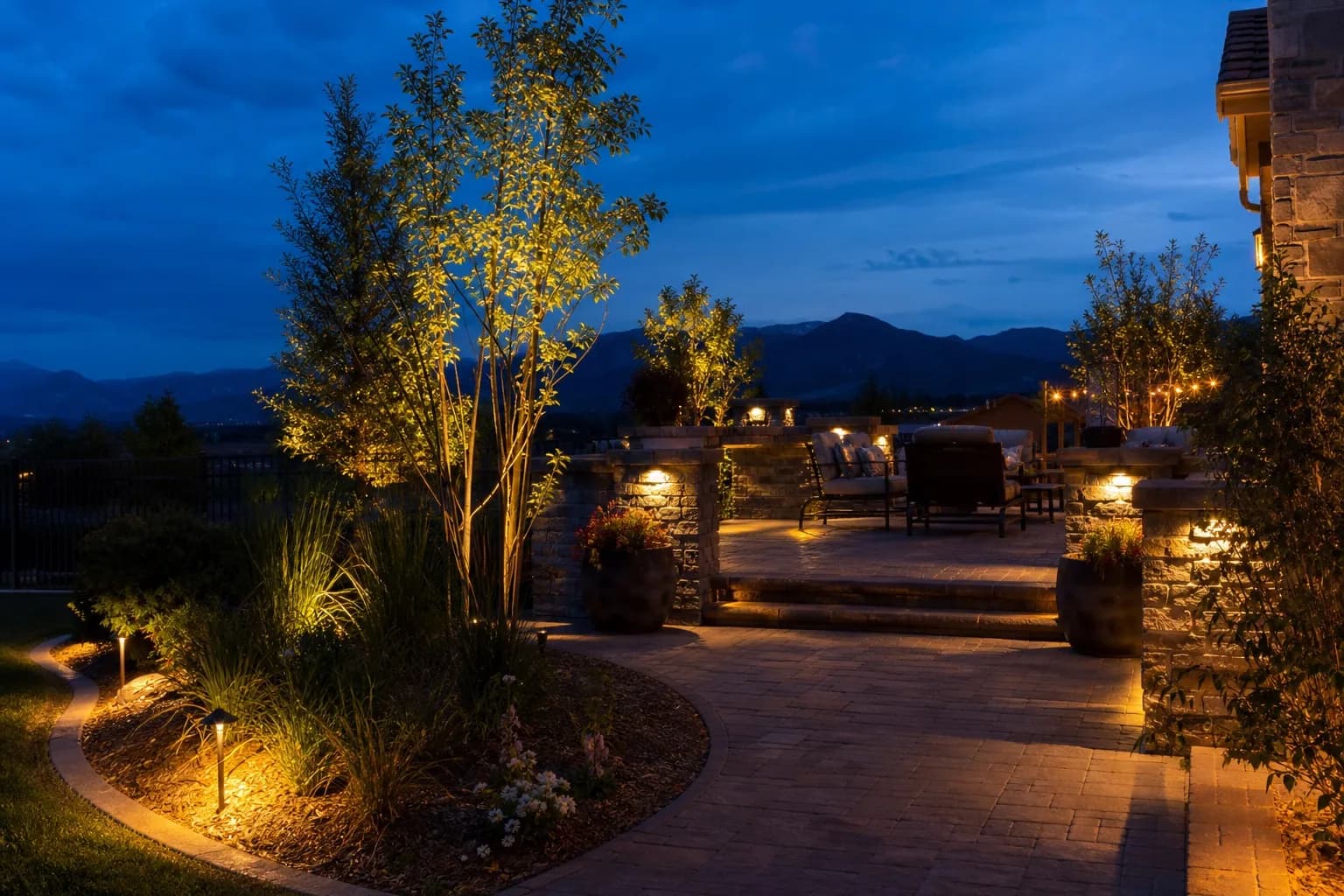
Task lighting answers “can I walk here safely?”, step risers, handrails, and changes in elevation around paver patios and pool decks.
Focal lighting answers “what should the eye notice?”, a stone veneer column, a sculptural tree, or the face of a spillway.
Ambient fill is the gentle bounce off ceilings, soffits, or pergolas so the space does not feel like a spotlight interrogation.
Skipping straight to decorative path fixtures without addressing steps is how yards look bright and still feel unsafe.
Transformers, home runs, and future load
We size transformers for today’s fixture count plus headroom for future columns, deck post lights, or water feature accents. Running a dedicated home run from the transformer location to logical hub points saves trench rework when you phase a project.
Wet ratings and pool envelopes
Anything near splash water or spray needs appropriate wet or damp location hardware and correct bonding coordination with pool builders. This is not the place for consumer-grade string lights or indoor connectors.
Controls homeowners actually use
Astronomic timers, simple app control, and discrete scene presets beat “everything on one switch.” We like systems you will use after the novelty wears off, especially when paired with water features or fire elements that share evening scenes.
Dark-sky courtesy
Shielded fixtures, aimed downlight, and lower color temperatures where appropriate keep neighbors happier in tighter Boulder County lots and reduce glare on windows.
When to bring in an electrician
Line-voltage bistro drops, panel upgrades, and GFCI protection strategies are licensed electrical work. Low-voltage design still has to respect separation, burial depth, and listing requirements, professional install protects your warranty story.
Planning a patio or pool and want lighting integrated from day one? Contact us. If pools are in the mix, pair this read with pool deck pavers and pool permits.
Frequently Asked Questions
Is DIY low-voltage lighting realistic? Low-voltage systems are lower risk than line voltage, but poor connections, overloaded transformers, and fixtures not rated for wet locations still fail. Around pools and bondable metal, professional design reduces fire risk and early corrosion.
What should be lit first? Safety: changes in elevation, steps, entries, and pool egress paths. Then architecture. Decorative accents come last.
Do LED fixtures hold up in Colorado? Quality housings with sealed gaskets outperform cheap aluminum in UV, hail, and thermal cycling. The housing usually fails before the LED chip.