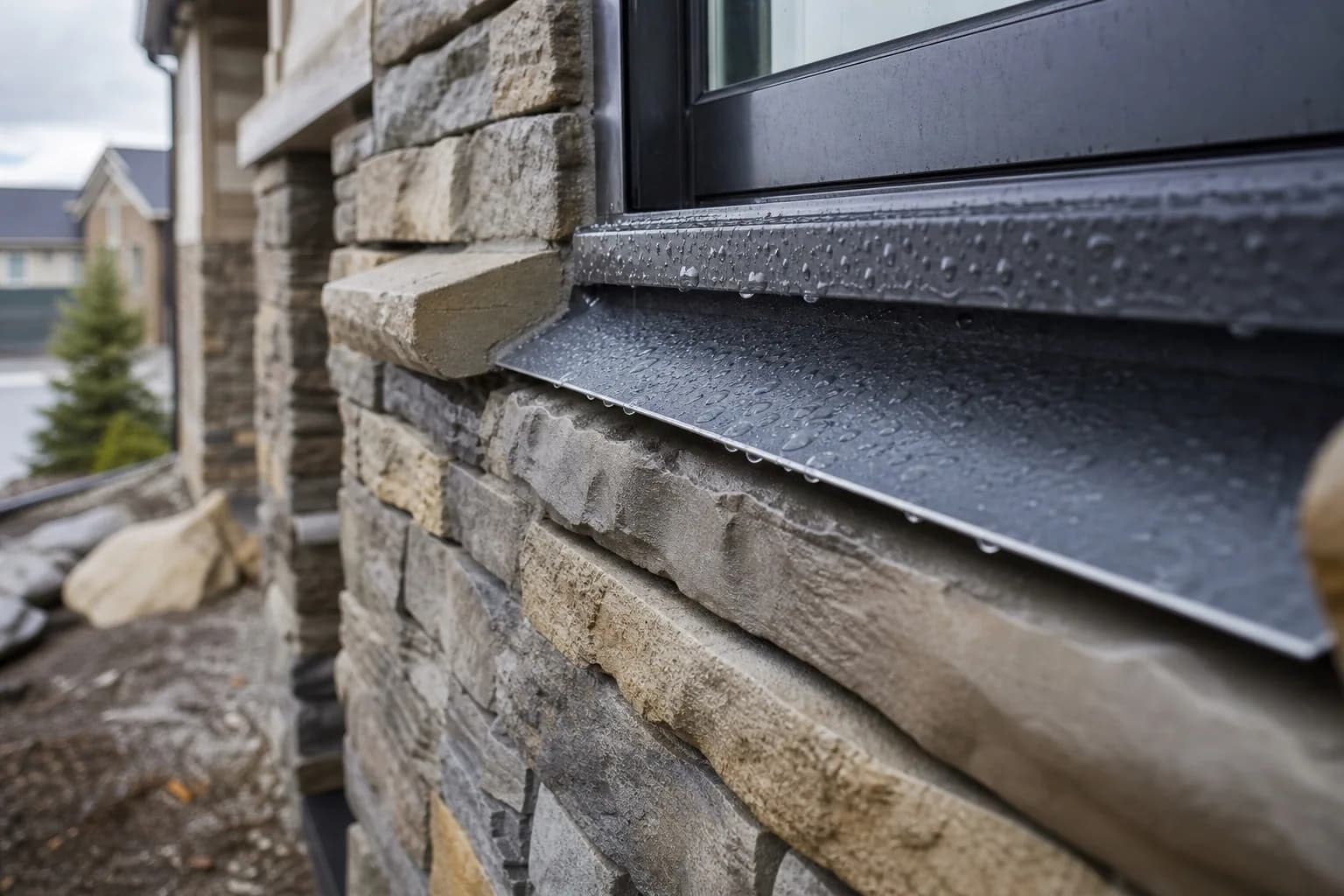
The pretty part of stone veneer is what you see. The performance is almost entirely what you do not: weather-resistive barriers, flashings at openings, weeps, and caps that shed water instead of storing it.
This matters everywhere, but Colorado’s wet spring snow, intense UV, and freeze-thaw cycles punish shortcuts faster than mild climates do.
The failure modes we see in the field
Staining below caps: Water enters a horizontal top, saturates the core, and bleeds minerals or adhesive surfactants down the face.
Spalling near grade: Splashback and deicing salts (on nearby walks) drive moisture into the base of walls without a weep path.
Delamination pockets: Adhesive-only systems without a drainage mat or without manufacturer-prescribed scratch coat prep can release in panels after a few seasons.
The principles that actually work
Shed water early: Slope caps, drip edges, and shingle-lapped flashings at penetrations keep bulk water out of the cavity.
Give moisture a way out: Weeps at the base of drained veneers, perforated flashings, and compatible drainage mats create predictable exit paths.
Separate dissimilar materials: Gaskets at shelf angles, isolation at shelf angles, and movement joints at long runs reduce stress cracks that become leak highways.
Outdoor kitchens and pool bond beams
Islands with grills, sinks, and refrigerators generate heat, steam, and condensate. Sleeve utilities, maintain manufacturer clearances, and sequence stone so maintenance panels remain accessible. Near pools, deck spray and chemistry make stainless pins and appropriate sealants more important than on a dry front porch.
Inspection mindset
When you review bids, ask how the contractor handles penetrations for lighting, outlets, and gas lines, not only what stone color they propose.
Related reading
Compare assembly types in stone veneer vs full masonry, then talk with our team about your wall or kitchen layout on contact.
Frequently Asked Questions
Why do veneers fail in Colorado? Trapped moisture behind the face cycles through freeze and thaw, stressing adhesive and mortar. Good details shed water before it becomes a problem.
Are weep screeds required on framed veneer? Model codes and manufacturer details for adhered veneer require predictable drainage paths. Execution varies by assembly, your jurisdiction governs.
Do outdoor kitchens need a drainage cavity? Many island builds benefit from ventilated cavities, sleeve penetrations, and careful WRB sequencing, especially near sinks and coolers.