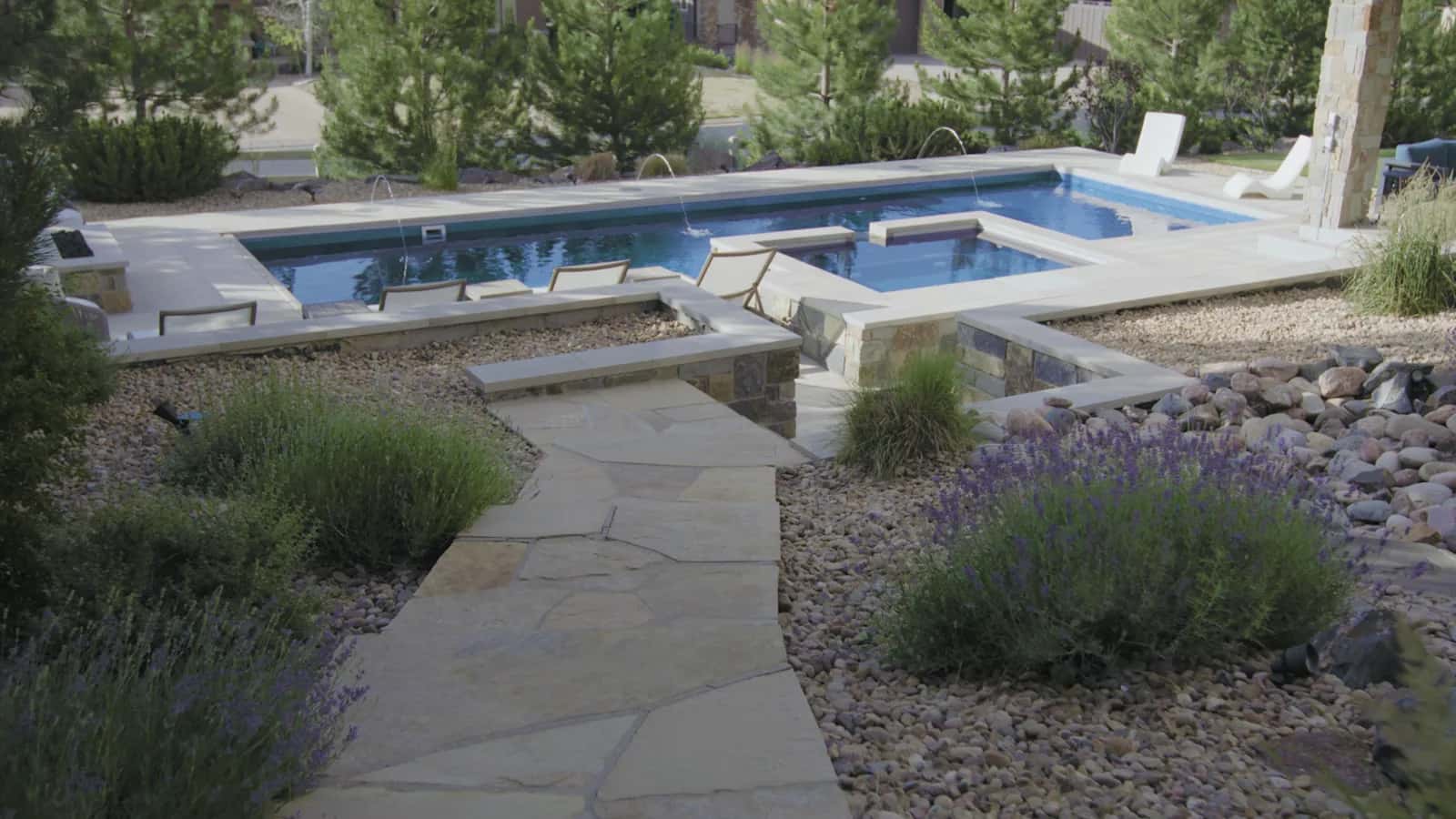
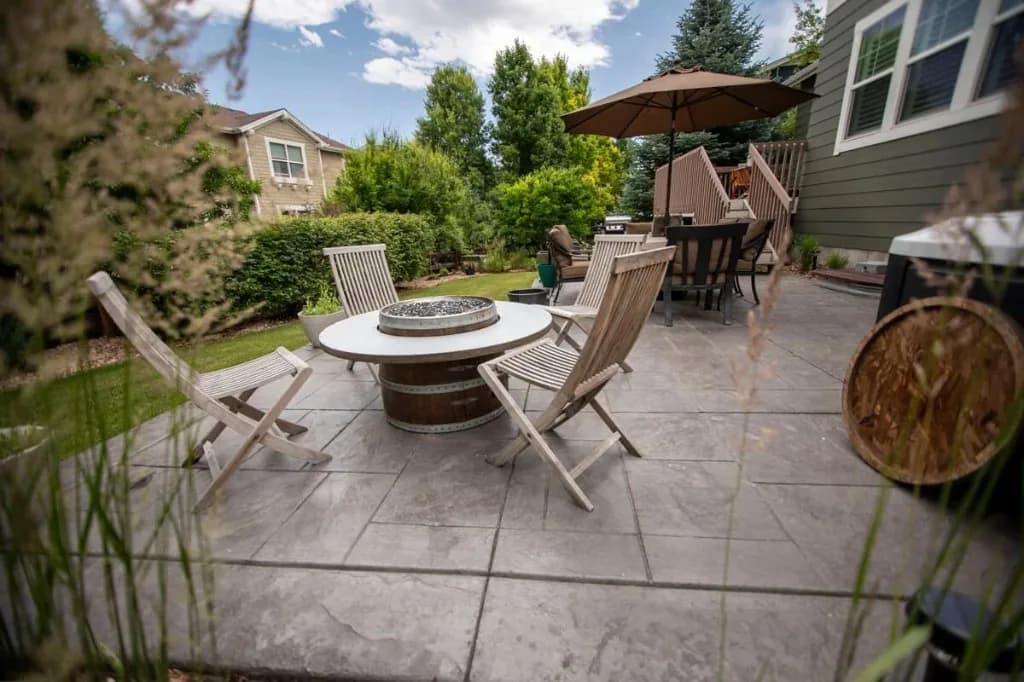
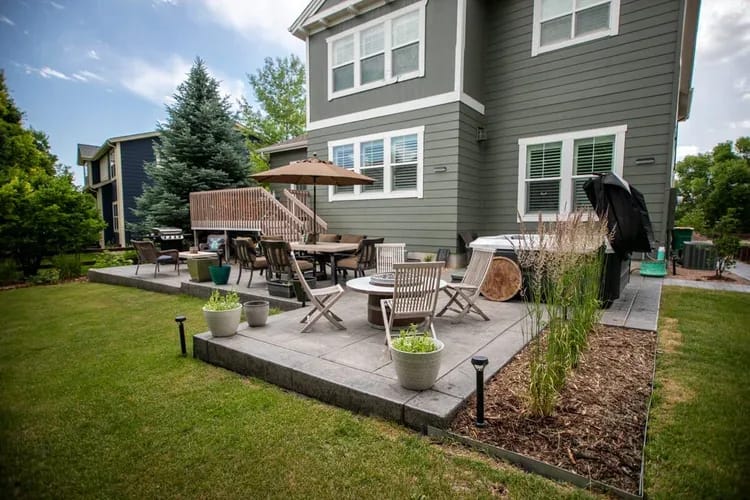
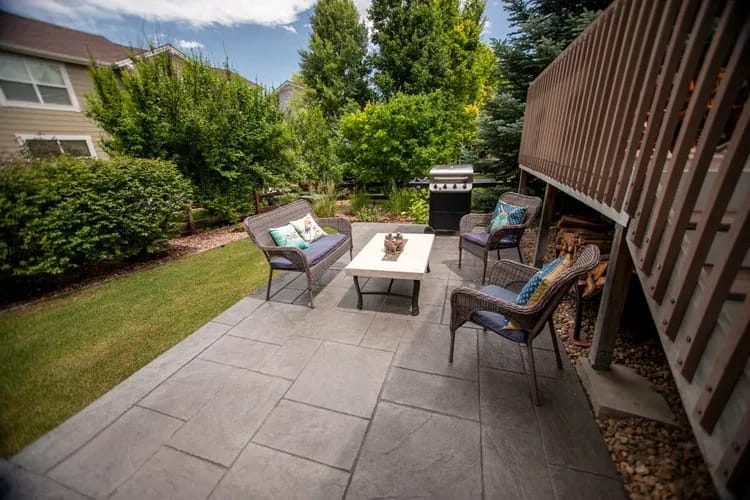
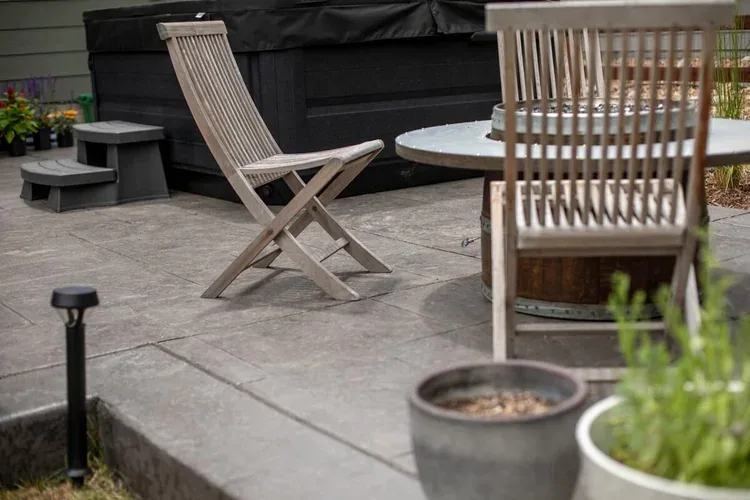
Lee Sorensen’s home sits in a 38-home neighborhood in Westminster, Colorado. He wanted a backyard oasis that felt finished, invited people to linger, and stayed responsible on water. He teamed up with Abby Rupsa, one of our go-to landscape designers at Botanical Living, for a plan that layered xeric plants, custom cedar planters, and a two-tier stamped concrete patio. We usually steer homeowners toward Belgard pavers when long-term freeze-thaw performance is the top priority, but Lee appreciated stamped concrete’s value, and with careful grading and jointing, it was the right fit for this yard.
The planting palette leans low-water and high-impact: aronia, blue oat grass, Manhattan euonymus, dwarf mugo pine, candytuft evergreen, and penstemon, all suited to Colorado’s sunny, drying wind cycles once established. The backyard now reads as a series of outdoor rooms rather than a single slab dropped behind the house.
Privacy, planters, and the “hell strip” conversation
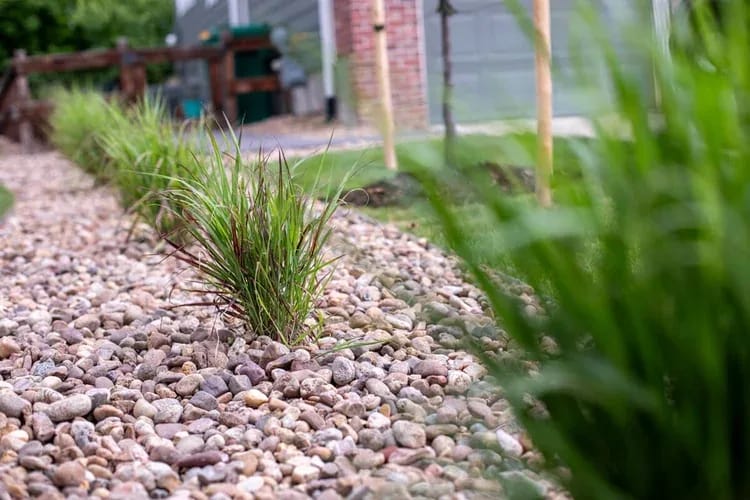
Lee wanted privacy along one property line. Abby specified a modest berm planted with Karl Foerster grass, about twenty-four inches of lift, to soften views without building a fortress wall. The movement of the grass catches afternoon light and reads modern against the cool gray concrete.
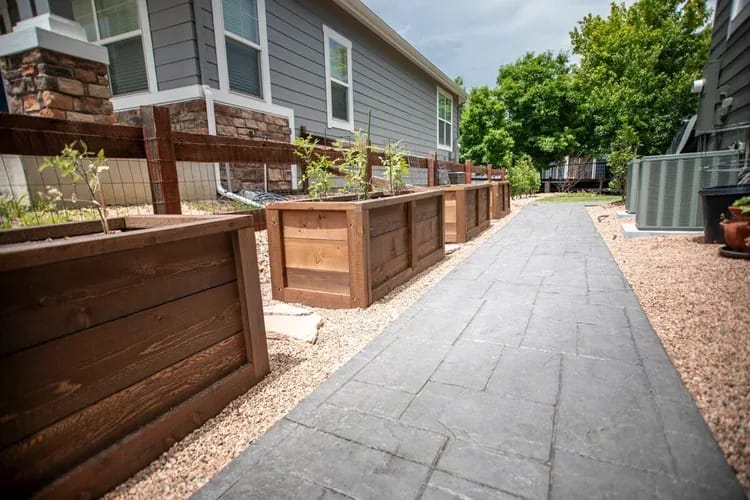
Lee is an avid gardener, so pots and seasonal color mattered. Abby suggested stained cedar planters that echo the wood tones of the deck and fence; we built those along the side yard so herbs and annuals sit at waist height where they are easy to water without drowning the xeric beds.
The front yard includes a classic “hell strip” between sidewalk and street. Lee hoped to xeriscape that strip differently from the neighbors. HOA timing paused that slice of the project, but Abby is working with the HOA on templates so homeowners can adopt low-water hell strips without guesswork, exactly the kind of neighborhood leadership we like to see on the Front Range.
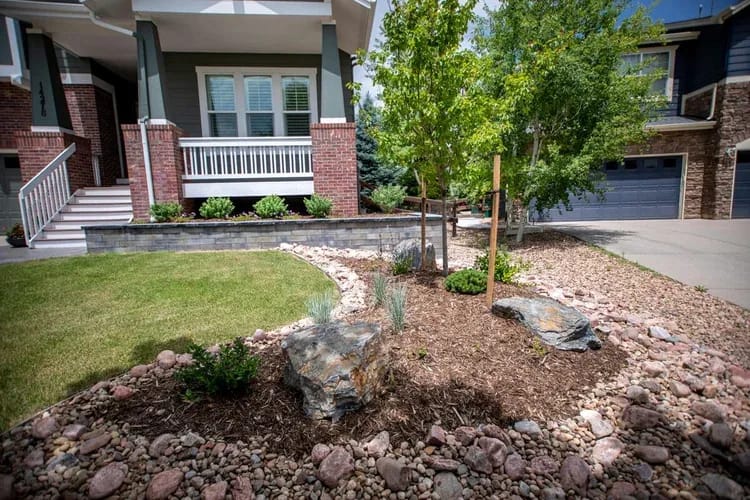
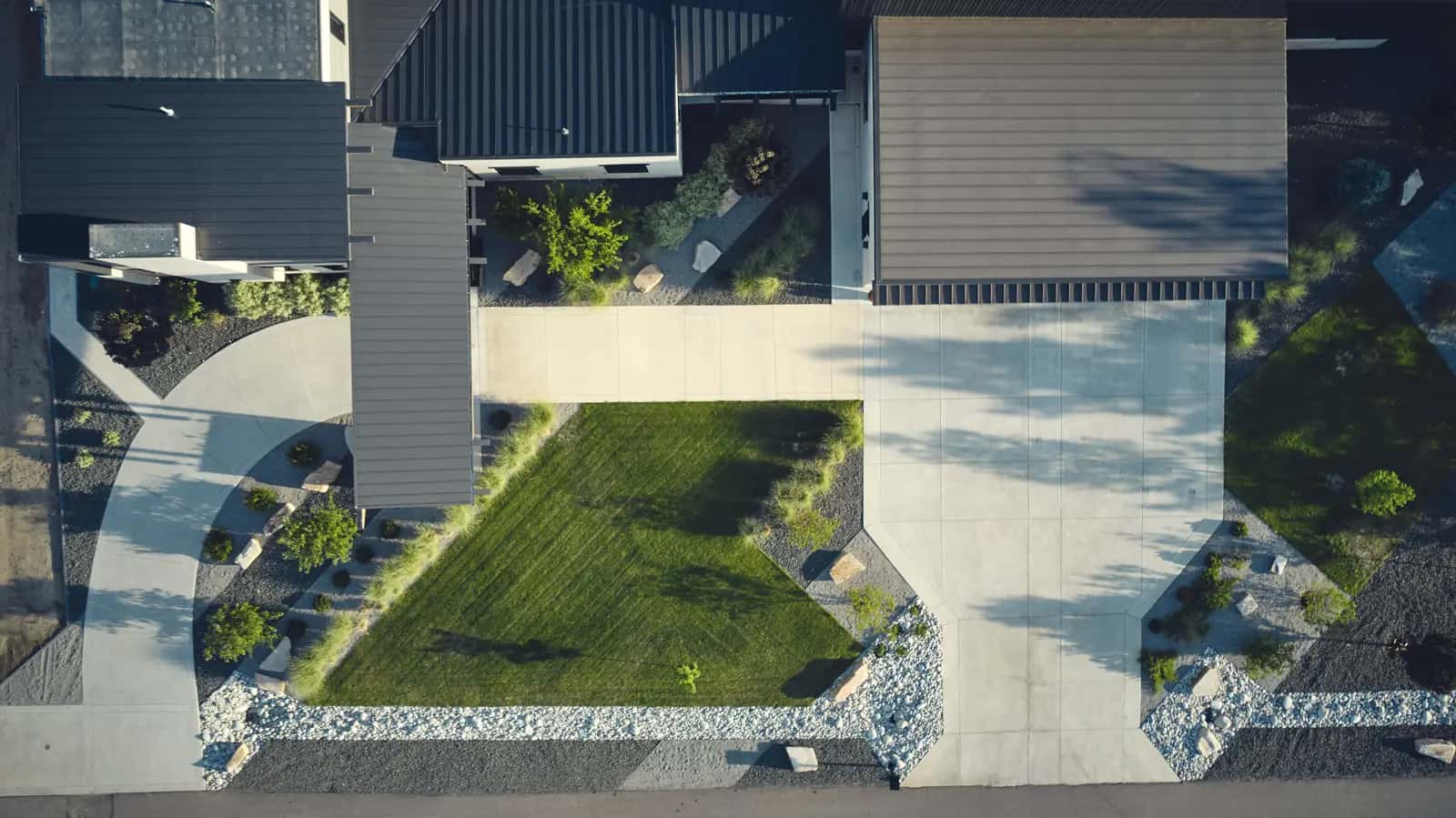
Warm brick on the home ties to a low segmental wall and cap at the entry walk, so hardscape reads intentional rather than pieced together.
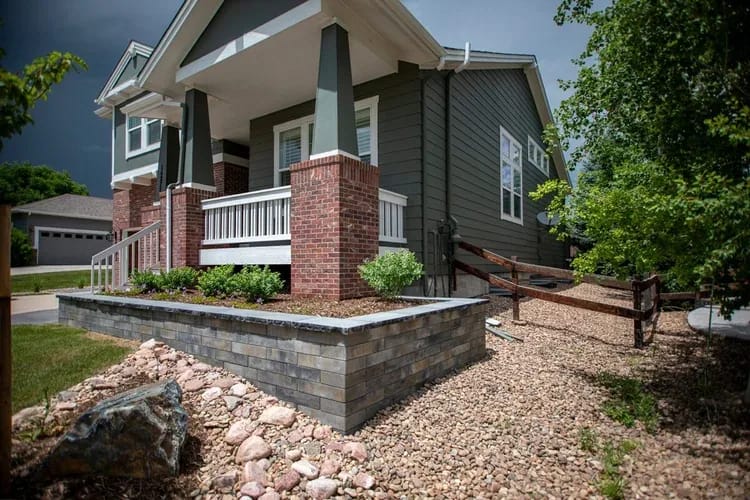
Front yard stonework and water-smart details
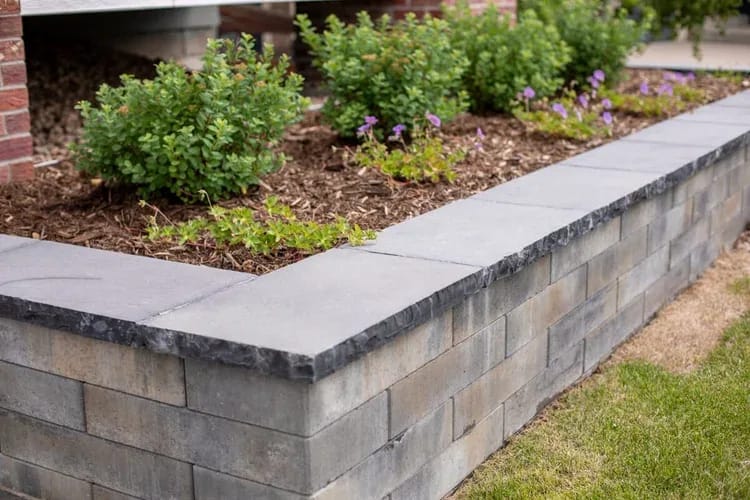
Closer to the street, a segmental retaining wall and cap define planting zones, keep mulch and gravel contained, and give the front elevation the same “designed” language as the rear patio. Decorative gravel bands, a young shade tree, and tight irrigation zoning keep maintenance predictable for a busy homeowner.
Takeaways for your own Westminster or Front Range backyard
This project is a strong example of how stamped concrete and disciplined planting can coexist: hardscape carries the geometry, plants carry the softness, and both share the same water budget. If you are weighing materials, start with our pavers vs. stamped concrete guide, then read what paver installs fail without so you know what “done right” looks like under Colorado soils, whether you ultimately choose pavers or concrete.
Ready to talk through your site? Contact us to schedule a design consultation in Westminster and across our Front Range service areas. Prefer visuals first? Browse the project gallery for more hardscape and pool work.
Frequently Asked Questions
Why stamped concrete instead of pavers on this Westminster project? Belgard pavers are our default recommendation for freeze-thaw performance, but stamped concrete can be the right tool when the design calls for broad, continuous planes, budget is a priority, and drainage plus detailing are engineered carefully. Lee understood the tradeoffs and chose stamped concrete with guidance from both our field team and the landscape designer.
Who designed the planting plan? Abby Rupsa of Botanical Living led the planting design and layout. Rock N Roll Stoneworks executed the hardscape, coordinated grades with the planting plan, and built the custom cedar planters along the side yard.
Do you build stamped concrete patios in other Front Range cities? Yes. We are based in Longmont and work across the Front Range, see our Westminster service area page and stamped concrete service for scope, process, and how we pair concrete with drainage on Colorado soils.