Retaining walls are functional structures first and aesthetic features second. They hold back soil, manage water runoff, create usable flat areas on sloped lots, and prevent erosion. Along the Front Range, where many properties in Lafayette, Erie, Boulder, Westminster, and Longmont sit on gently to moderately sloped terrain, retaining walls are one of the most common hardscape projects we build.
But they are also one of the most frequently under-budgeted projects. The cost range is wide, and homeowners who get a surprisingly low bid are often getting a wall that will not perform correctly in five years. Here is what actually drives retaining wall costs in Colorado.
Cost Per Linear Foot: The Basic Range
For a professionally engineered and built retaining wall along the Front Range, expect to pay between $50 and $150 or more per linear foot. That range is broad because the variables are significant.
Small garden walls (under 2 feet tall): $50 to $70 per linear foot. These are straightforward gravity walls that do not require geogrids or extensive engineering.
Mid-height walls (2 to 4 feet): $70 to $120 per linear foot. These walls require a proper aggregate base, drainage stone behind the wall, and drain tile at the footing. Material and labor costs increase meaningfully with height because the base needs to be wider and the structural requirements are greater.
Tall walls (over 4 feet): $120 to $150+ per linear foot. Walls over 4 feet typically require engineered drawings, geogrid soil reinforcement, and building permits. The engineering alone can add $1,500 to $3,000 to the project cost, but it is not optional. These walls are holding back thousands of pounds of soil, and a structural failure is dangerous and expensive to fix.
What Drives the Price Variation
Wall height: This is the single biggest factor. A wall that goes from 2 feet to 4 feet does not just double in cost. The base width increases, the amount of backfill and drainage stone increases, and the structural requirements change significantly. Cost scales closer to exponentially than linearly with height.
Material selection: Belgard segmental retaining wall blocks like the Celtik Wall and Belair Wall systems are engineered for structural performance and carry manufacturer warranties. They cost more than commodity blocks from a home center, but they are rated for the loads they need to carry and they interlock properly. Natural stone walls are the most expensive option but offer a distinct aesthetic. Visit our retaining walls and stairs page for examples of different material options.
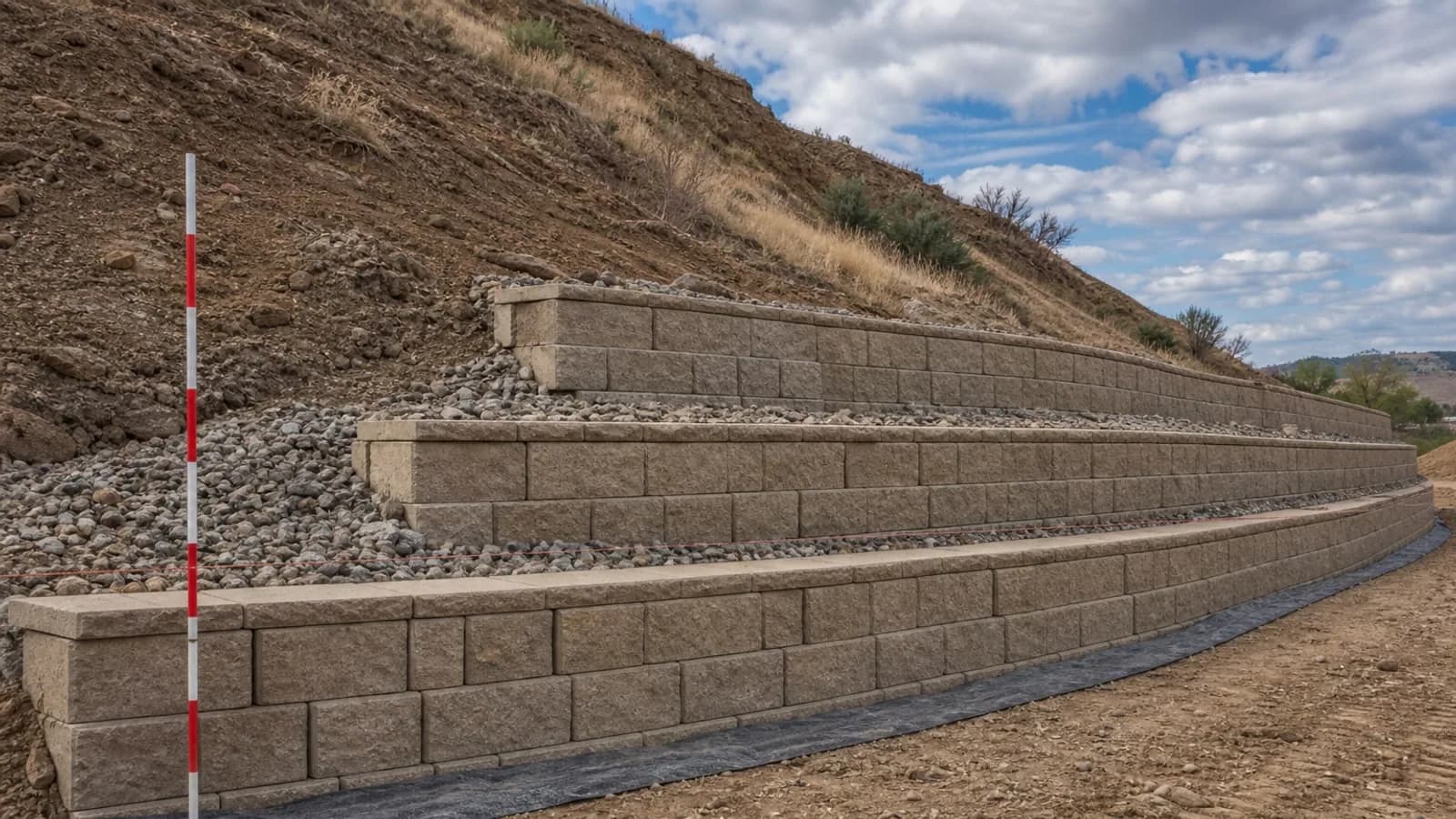
Drainage: Every retaining wall in Colorado needs drainage behind it. Water building up behind a wall is the number one cause of retaining wall failure. A proper installation includes drain tile at the base, drainage stone behind the wall face, and filter fabric to keep soil from migrating into the drainage layer. Cutting corners on drainage is how cheap walls get cheap, and it is why they fail.
Soil conditions: Colorado soils along the Front Range are notoriously expansive. The clay-heavy soils in much of Lafayette, Longmont, and Firestone swell when wet and shrink when dry, creating lateral pressure changes that a retaining wall needs to accommodate. In areas with particularly heavy clay, additional base preparation or soil modification may be necessary.
Access and site conditions: Tight access, steep slopes, and the need for machine excavation versus hand digging all affect labor costs. A wall along a rear property line that requires material to be moved by wheelbarrow costs more to build than one accessible by a skid steer from a driveway.
Permits and Engineering
In most Front Range municipalities, retaining walls over 4 feet tall measured from the bottom of the footing to the top of the wall require a building permit and stamped engineering drawings. Some cities, including Boulder, have stricter requirements that may apply to shorter walls depending on proximity to property lines or the amount of soil being retained.
Do not skip this step. Unpermitted retaining walls create liability problems if they fail, and they can cause issues when you sell your home. A qualified contractor handles the permitting process as part of the project scope.
Terraced Walls vs. Single Tall Walls
For slopes that require significant height, terraced walls (two or more shorter walls stepped up the slope) are often a better solution than a single tall wall. Terracing reduces the structural load on each individual wall, eliminates the need for engineered drawings in many cases, and creates planting pockets between tiers that soften the visual impact. From a cost perspective, terraced walls sometimes cost slightly more in total material but save on engineering fees and can be simpler to build.
Getting an Accurate Estimate
Retaining wall estimates require an on-site visit. The slope, soil, drainage, access, and height all need to be assessed in person. Online calculators and per-linear-foot estimates are starting points, but every site is different. Contact Rock N Roll Stoneworks to schedule a site evaluation and detailed proposal for your retaining wall project anywhere along the Front Range.
Frequently Asked Questions
How much does a retaining wall cost per linear foot in Colorado? Professionally built retaining walls along the Front Range typically run $50 to $150+ per linear foot. Small garden walls under 2 feet cost less; walls over 4 feet require engineering, geogrid, and permits, pushing costs toward the top of the range.
Do retaining walls need drainage in Colorado? Yes. Drain tile at the footing, drainage stone behind the face, and filter fabric are essential. Water pressure behind a wall is the number one cause of failure, especially in expansive Front Range clay soils.
When does a Colorado retaining wall need a permit? Most Front Range municipalities require permits and engineered drawings for walls over 4 feet from the bottom of the footing to the top. Boulder and some other cities may require permits for shorter walls near property lines.